Health and Safety Policy for Removal Van Swiss Cottage
 This Health and Safety Policy sets out the standards required for safe, efficient, and responsible moving operations involving a removal van in Swiss Cottage. It applies to all team members, subcontractors, and anyone assisting with loading, driving, unloading, or handling household and business items. The aim is to prevent injury, protect property, and ensure that every stage of a move is carried out with careful planning and consistent risk control.
Our commitment is based on three priorities: the safety of people, the security of belongings, and the reliability of the move. A removal van service must be prepared for changing conditions, varying load sizes, and different property layouts. By following clear procedures, we reduce avoidable incidents and support a safer working environment for everyone involved.
 All work begins with a basic risk assessment. Before any lifting or vehicle movement takes place, the team identifies hazards such as stairs, narrow hallways, poor lighting, slippery surfaces, heavy items, and awkward access points. When operating a moving van in Swiss Cottage, staff must also consider route selection, parking position, and safe unloading space. If conditions change, the plan must be reviewed immediately.
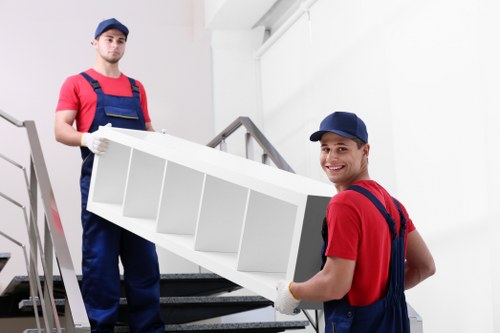
Correct manual handling is essential. Heavy or bulky items should never be lifted without checking weight, shape, and balance. Team members must use safe lifting techniques, keep a stable stance, and ask for assistance when needed. Items that are difficult to carry should be moved with appropriate equipment, including trolleys, straps, blankets, and protective covers. A removal vehicle should always be loaded so that weight is distributed evenly and shifting during transit is prevented.
Vehicle safety is a central part of the policy. Every removal van must be inspected before use to confirm that tyres, brakes, lights, mirrors, fuel levels, and securing equipment are in good working order. Drivers must be fit to drive, free from impairment, and able to concentrate fully on the journey. Seat belts are to be worn at all times, and drivers must follow road rules, speed limits, and safe driving practices without exception.
 In the middle of each move, communication becomes especially important. Team members should share clear instructions, confirm who is responsible for each task, and avoid rushed or unclear directions. Where a load includes fragile or high-value possessions, these must be identified and handled with extra attention. A safe removal van operation depends on coordination, awareness, and steady decision-making rather than speed alone.
Protective equipment must be used whenever required. Gloves, supportive footwear, and high-visibility clothing may be needed depending on the nature of the job and the environment. Staff should keep pathways clear, avoid carrying loads that block vision, and stop work if a dangerous obstruction is present. Any spillages, broken items, or damaged packaging must be dealt with promptly to reduce slip, trip, and cut risks. This is part of maintaining a responsible van removal process.
Customer property must be treated with respect and care at all times. Furniture should be wrapped or padded where necessary, and fragile items should be clearly separated from heavier goods. Doors, floors, and walls should be protected during loading and unloading to reduce accidental damage. A careful removals approach supports both safety and professionalism, especially when working in shared buildings or properties with limited access.
Emergency readiness is also included in the policy. Staff must know how to respond to injuries, vehicle breakdowns, fire hazards, or unexpected incidents during a move. First aid supplies should be available where required, and any accident must be reported and recorded according to procedure. If a task becomes unsafe, work must stop until the issue has been resolved. In all cases, a removal van company must prioritise prevention, quick response, and accurate reporting.
 Environmental responsibility is part of safe working practice. Packaging waste, damaged materials, and discarded wrapping should be collected and disposed of properly. Engine idling should be minimised where possible, and vehicles should be used efficiently to reduce unnecessary emissions and fuel use. Good housekeeping around the removal van and work area helps prevent clutter, improves movement, and supports safer operations overall.
Staff Responsibilities
All team members are expected to follow instructions, use equipment correctly, and report hazards immediately. Supervisors must ensure that tasks are assigned appropriately and that workers are not asked to perform unsafe lifts or drive when tired. A professional removal service depends on competence, honesty, and attention to detail at every stage.
Training is necessary to maintain high standards. Staff should understand manual handling, safe loading methods, vehicle checks, emergency action, and the correct use of protective equipment. New employees must be supported before working independently, and refresher training should be provided when needed. Ongoing learning helps ensure that a moving van operation remains safe and dependable.
Monitoring and Review
 This policy will be reviewed regularly to make sure it remains effective and suitable for current operations. Any changes in working methods, equipment, or risk levels should trigger an update. By reviewing procedures and learning from incidents, the team can strengthen standards and maintain a safe removal van service for every job.
Policy Statement
We are committed to providing a working environment where health and safety are taken seriously, risks are controlled, and every removal is planned with diligence. Through clear procedures, proper equipment, and responsible conduct, our removal van Swiss Cottage operations aim to protect people, property, and the quality of service.